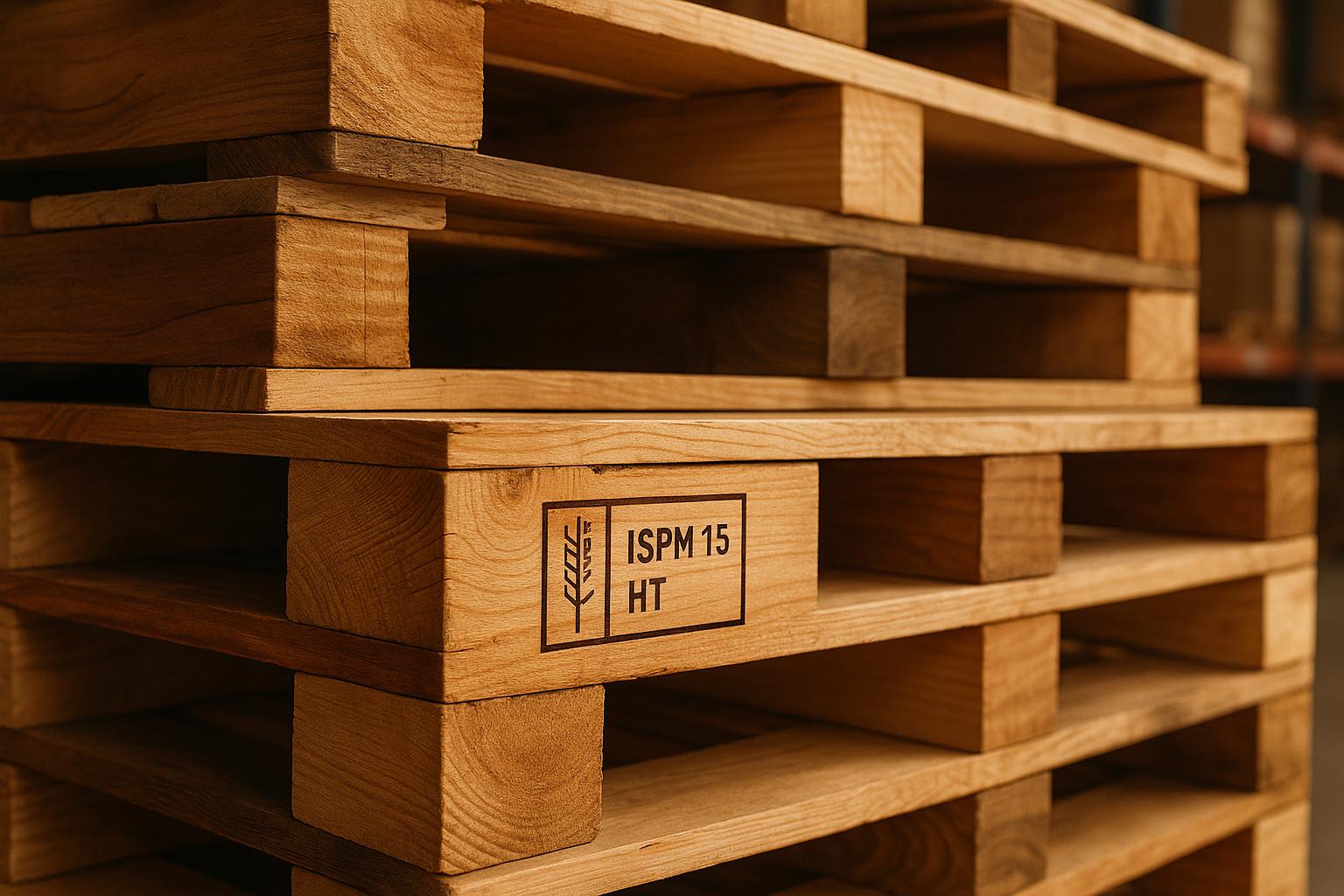
ISPM 15 ensures wood packaging used in international trade is treated to prevent pest spread. It applies to solid wood materials thicker than 6 mm, like pallets and crates, requiring heat treatment or methyl bromide fumigation. Processed wood products (e.g., plywood, OSB) are exempt. Non-compliance risks shipment delays, fines, or rejections. Look for the ISPM 15 "wheat stamp" on treated packaging to confirm compliance.
Key Points:
- Applies to: Solid wood packaging (pallets, crates, dunnage) over 6 mm thick.
- Treatment Methods: Heat treatment (preferred) or methyl bromide fumigation.
- Exemptions: Processed wood (plywood, OSB, particleboard) and wood under 6 mm thick.
- Marking: ISPM 15 stamp with country code, producer ID, and treatment method.
- Risks of Non-Compliance: Customs rejection, delays, re-treatment costs.
For businesses, partnering with certified manufacturers ensures proper treatment, marking, and documentation for smooth customs clearance.
ISPM 15
ISPM 15 Treatment Methods
Before choosing wood packaging for international shipments, it’s crucial to understand the treatment methods that ensure compliance with ISPM 15. This standard outlines two primary ways to eliminate pests from wood packaging: heat treatment and methyl bromide fumigation. While both methods are effective at eradicating pests that could spread across borders, they achieve this in very different ways and come with their own pros and cons.
Heat Treatment (HT)
Heat treatment is the most widely used method for ISPM 15 compliance, thanks to its effectiveness and eco-friendly nature. This process involves placing wood in a kiln or specially designed chamber where its core temperature is raised to at least 56°C (132.8°F) and maintained for a minimum of 30 consecutive minutes.
To ensure the wood reaches the required temperature, calibrated sensors monitor the process closely. This method penetrates the wood thoroughly, eradicating pests throughout its thickness. Only certified facilities with the proper equipment can perform this treatment and apply the official ISPM 15 mark.
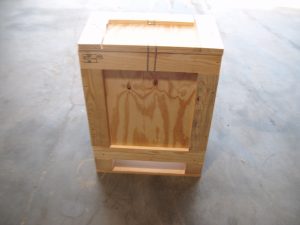
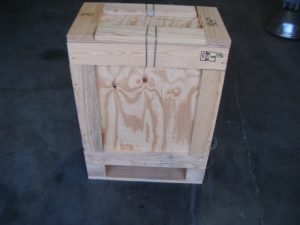
Heat treatment works for both hardwoods and softwoods, although denser hardwoods may need slightly more time to reach the target core temperature. One of the biggest advantages of heat treatment is that it produces no harmful emissions or chemical residues. For example, Twin Oak Crates, LLC uses certified heat treatment processes for their custom wooden crates, providing clients with properly treated and stamped packaging that complies with international shipping standards.
Methyl Bromide Fumigation (MB)
Methyl bromide fumigation takes a different approach. This method involves sealing wood packaging in a chamber and introducing methyl bromide gas at controlled levels for a specific period. While effective, its use has been declining due to concerns about its ozone-depleting properties and potential health risks. Although still allowed for certain export applications in the United States, many countries now prefer or require heat-treated wood packaging instead.
Marking and Debarking Requirements
Regardless of the treatment method, wood packaging must be debarked before treatment and marked with the ISPM 15 "wheat stamp" once the process is complete. Debarking must follow ISPM 15 guidelines to ensure compliance.
The ISPM 15 mark is a crucial component and must be visible, permanent, and placed on at least two opposite sides of the packaging. This mark includes four key elements:
- The IPPC logo
- A two-letter country code (e.g., "US" for the United States)
- A unique code identifying the producer or treatment provider
- A code for the treatment method ("HT" for heat treatment or "MB" for methyl bromide)
Only certified facilities are authorized to apply this mark. They must also maintain detailed treatment records and undergo regular inspections by National Plant Protection Organizations or other authorized agencies.
| Treatment Method | Process Requirements | Environmental Impact | Global Acceptance |
|---|---|---|---|
| Heat Treatment (HT) | Wood heated to 56°C (132.8°F) core for 30 minutes | No emissions, eco-friendly | Most commonly used and accepted |
| Methyl Bromide (MB) | Gas fumigation at prescribed levels | Ozone-depleting, poses health risks | Usage declining; increasingly restricted |
How ISPM 15 Applies to Different Wood Types
Understanding how ISPM 15 regulations apply to various wood types is crucial for ensuring compliance in international shipping. These rules vary depending on whether the packaging uses solid wood, processed wood products, or a combination of both. Below, we’ll break down the specific requirements for each.
Solid Hardwoods vs. Softwoods
When it comes to ISPM 15, both hardwoods and softwoods are treated the same. Regardless of whether you’re working with hardwoods like oak, maple, or cherry, or softwoods like pine, spruce, or fir, all solid wood packaging thicker than 6 mm must be debarked and treated to meet ISPM 15 standards before receiving the required mark. The debarking process must align with the criteria outlined in ISPM 15.
For example, Twin Oak Crates, LLC ensures that all solid wood materials – whether hardwood or softwood – undergo proper heat treatment and meet ISPM 15 certification standards.
Exemptions for Processed Wood Products
Processed wood products are not subject to ISPM 15 requirements because their manufacturing processes effectively eliminate pest risks. Materials like plywood, oriented strand board (OSB), particle board, and fiberboard fall under this exemption. The high temperatures, pressure, and chemical adhesives used in their production ensure these products are pest-free. As a result, packaging made entirely of processed wood materials can be shipped internationally without the need for ISPM 15 treatment, marking, or certification.
Mixed-Material Packaging Considerations
When packaging combines solid wood with processed wood products, the entire package must comply with ISPM 15 regulations if any solid wood is included. For instance, a crate with a solid pine frame and plywood panels would require treatment because of the pine frame.
This approach can offer structural advantages but also introduces additional costs and time for treatment and certification. Businesses should carefully plan their packaging designs and work with experienced ISPM 15-certified manufacturers to ensure compliance, especially when solid wood is necessary for strength or specific design needs.
| Wood Type | ISPM 15 Treatment Required | Marking Required | Common Examples |
|---|---|---|---|
| Solid Hardwoods | Yes | Yes | Oak crates, maple pallets, cherry dunnage |
| Solid Softwoods | Yes | Yes | Pine boxes, spruce pallets, fir blocking |
| Plywood | No | No | Plywood shipping boxes, panel crates |
| OSB/Particle Board | No | No | OSB crating, particle board packaging |
| Mixed Materials | Yes (if any solid wood is present) | Yes | Pine frame with plywood panels |
sbb-itb-1c2a65d
Selecting ISPM 15-Compliant Wood Packaging
Picking the right wood packaging materials for international shipments is more than just a logistical step – it’s a critical decision. A misstep here could lead to delays, rejected shipments, and extra costs for treatment at customs.
Key Factors for Material Selection
Start by reviewing the destination country’s regulations. While ISPM 15 is a global standard, some countries enforce additional rules or stricter protocols that might impact your shipment.
Choosing the right wood type is essential for balancing compliance and cost. Processed wood materials like plywood, OSB, and particle board are exempt from ISPM 15 treatment requirements, making them a convenient option. However, if your packaging needs the strength of solid wood, be prepared to include treatment costs in your budget.
The availability of certified treatment facilities in your area also plays a role. Partnering with local ISPM 15-certified manufacturers can save time and reduce transportation costs. For example, Twin Oak Crates, LLC offers ISPM 15-certified solutions, including custom crate design and on-site packaging, to simplify compliance for U.S. exporters.
If your packaging might be reused for future international shipments, it’s smart to start with ISPM 15-compliant materials. This ensures you won’t face unexpected complications if the packaging is later repurposed for export.
Cost considerations vary widely between materials. While processed wood may have higher upfront costs, it eliminates the need for additional treatment and reduces the risk of delays. Solid wood, on the other hand, requires treatment, marking, and certification but might be the better option for heavy-duty applications where strength is a priority.
Once you’ve selected your materials, the next step is confirming compliance by checking for the official ISPM 15 stamp.
Verifying Compliance with the ISPM 15 Stamp
After selecting compliant materials, it’s crucial to verify certification by looking for the ISPM 15 stamp. Known as the ISPM 15 "wheat stamp", this mark is the only reliable way to confirm that wood packaging meets international standards. The stamp must be clearly visible and permanently applied to each piece of solid wood packaging.
Ensure the stamp includes all required elements as specified by ISPM 15.
Visual inspection alone isn’t enough to determine compliance. Even if the wood looks treated, it won’t meet ISPM 15 standards without the official stamp. Customs agents are trained to spot these stamps, and missing or unclear markings can result in delays or outright rejection of your shipment.
To avoid issues, request proper documentation from your supplier. Reputable manufacturers should provide treatment certificates and detailed batch records, along with clear photos of the stamped packaging.
Regularly verifying your suppliers is another important step. When sourcing materials from multiple providers, establish relationships with certified manufacturers who can guarantee proper treatment, marking, and documentation for all solid wood components.
| Compliance Factor | What to Verify | Red Flags to Avoid |
|---|---|---|
| ISPM 15 Stamp | Clear, permanent marking with all required elements | Faded stamps, missing treatment codes, or handwritten markings |
| Supplier Certification | Valid NPPO certification and treatment facility registration | Suppliers unable to provide certification documentation |
| Documentation | Treatment certificates and detailed batch records | Missing paperwork or vague claims of compliance |
ISPM 15 Certification and Implementation
Getting wood packaging certified for international shipping involves working with reliable providers and keeping detailed records to meet customs requirements. The process includes proper wood treatment, regular monitoring, and maintaining accurate documentation. Below, we’ll explore how certified manufacturers and strong documentation practices come together to ensure compliance.
Working with Certified Manufacturers
Teaming up with an ISPM 15-certified manufacturer is the best way to guarantee your wood packaging meets international standards. These manufacturers handle the heat treatment process to meet the required core temperature of 56°C (132.8°F) for at least 30 minutes. They also apply the official ISPM 15 stamp and provide the necessary documentation to ensure smooth customs clearance. This thorough process significantly reduces the chances of compliance issues that could disrupt your shipments.
A great example of a trusted partner is Twin Oak Crates, LLC, based in Knoxville. They specialize in custom wooden crates for international shipping and are ISPM 15-certified, meaning they can apply heat-treated stamps that meet global shipping regulations.
"Our customers are assured that our packing will meet their most demanding need for protection and compliance." – Twin Oak Crates, LLC
Certified manufacturers are regularly audited by accrediting bodies to confirm that their treatment methods, marking systems, and record-keeping align with ISPM 15 standards. Failing these audits can lead to suspension or even loss of certification.
When choosing a certified manufacturer, always confirm their certification status and ask about their audit history. They should be able to provide proof of certification, explain their treatment processes, and offer tailored solutions for your shipping needs. Working with a local certified provider, like Twin Oak Crates, LLC, can also streamline communication, reduce lead times, and lower shipping costs. This partnership forms the foundation for creating the detailed documentation customs authorities require.
Documentation and Inspection Protocols
After securing a partnership with a certified manufacturer, the next step is to focus on organizing and maintaining proper documentation for customs inspections. Treatment certificates are critical as they serve as proof that your wood packaging has undergone the necessary ISPM 15 treatment. Certified manufacturers are responsible for issuing these certificates and keeping detailed records that document the treatment history of each batch of wood.
Customs officials frequently inspect wood packaging to verify the presence and clarity of the ISPM 15 stamp. To avoid delays, ensure all your documentation is well-organized. Keep treatment certificates easily accessible, confirm that all packaging displays a clear and permanent ISPM 15 stamp, and train your logistics team to recognize compliant markings and prepare for customs inquiries.
Missing or incomplete documentation can lead to delays, re-treatment, or even shipment rejection. Keeping accurate records helps avoid these issues and ensures smooth customs clearance. Conducting internal audits of your packaging processes, verifying supplier certifications, and providing regular staff training can further support compliance and reduce risks.
| Documentation Type | Responsible Party | Key Information Required | Retention Period |
|---|---|---|---|
| Treatment Certificates | Certified Manufacturer | Treatment method, temperature, duration, batch details | Minimum 2 years |
| ISPM 15 Stamps | Certified Manufacturer | Country code, treatment code, manufacturer ID | Permanent on packaging |
| Compliance Records | Shipper/Exporter | Certificate copies, supplier verification, training records | 3–5 years recommended |
Key Points About ISPM 15 Compliance
ISPM 15 sets specific requirements for treating and certifying all solid wood packaging materials used in international shipping.
To comply, all solid wood packaging – like pallets, crates, and dunnage – must be debarked, treated, and marked with the official ISPM 15 stamp. This ensures that these materials meet international standards when crossing borders.
The treatment process is straightforward but essential. Heat treatment, the preferred method, involves heating the wood to 56°C (132.8°F) for at least 30 minutes. It’s considered more eco-friendly and efficient compared to methyl bromide fumigation, which is less commonly used due to higher costs and longer processing times. The ISPM 15 stamp, which certifies compliance, plays a key role in facilitating smooth international trade.
Processed wood products, such as plywood or particleboard, are exempt from these treatment requirements – unless they are combined with solid wood components. If solid wood is part of the packaging, the entire unit must meet ISPM 15 standards.
Compliance is verified through the official ISPM 15 stamp, often called the "wheat stamp." Customs agents are trained to check for this mark, which includes details like country codes, producer numbers, and treatment codes. Missing or illegible stamps can lead to shipment delays or outright rejections.
The best way to ensure compliance is by working with certified manufacturers who handle the entire process, from proper treatment and stamping to documentation. For instance, companies like Twin Oak Crates, LLC provide custom wooden crates that meet ISPM 15 standards. Their certifications and regular audits help minimize the risk of non-compliance.
Proper documentation is just as important as the treatment itself. Keep treatment certificates from suppliers, ensure all packaging is clearly stamped, and maintain thorough records for potential customs inspections. If packaging is repaired or altered after treatment, it must be re-treated and re-stamped to remain compliant.
Even for domestic shipments that don’t require ISPM 15 compliance, using treated materials can prevent complications if the goods are later exported. This proactive approach reduces risks and ensures smoother international operations.
FAQs
What are the environmental differences between methyl bromide fumigation and heat treatment for ISPM 15 compliance?
Methyl bromide fumigation and heat treatment are both methods used to comply with ISPM 15 standards, but their impact on the environment is quite different. Methyl bromide, a chemical fumigant, poses a serious threat to the ozone layer and contributes to environmental harm. Because of these risks, its use is being phased out in many parts of the world. In contrast, heat treatment offers a cleaner alternative. By using high temperatures to eliminate pests, it avoids introducing harmful chemicals into the environment.
For companies that prioritize sustainability, heat treatment is often the go-to solution. Twin Oak Crates, LLC, an ISPM 15-certified provider, uses heat-treated wood for international shipments, ensuring compliance while keeping environmental concerns in check.
How can I ensure my wood packaging materials meet ISPM 15 standards for international shipping?
To meet ISPM 15 standards, ensure your wood packaging materials carry the official heat treatment (HT) stamp. This mark guarantees the wood has been treated to remove pests and satisfies international shipping regulations. If you’re uncertain about compliance, reach out to a certified provider for guidance.
What should a business do if their shipment is rejected for not meeting ISPM 15 standards?
If your shipment gets turned away because it doesn’t comply with ISPM 15 regulations, the first thing to do is figure out what went wrong. Issues often stem from missing or incorrect heat treatment stamps or the use of untreated wood materials.
Reach out to your supplier or manufacturer right away to address the problem. You might need to replace the non-compliant materials or arrange for proper treatment and re-certification. To avoid future headaches, consider partnering with a certified company, like Twin Oak Crates, LLC, to ensure your shipments meet ISPM 15 standards for international shipping.